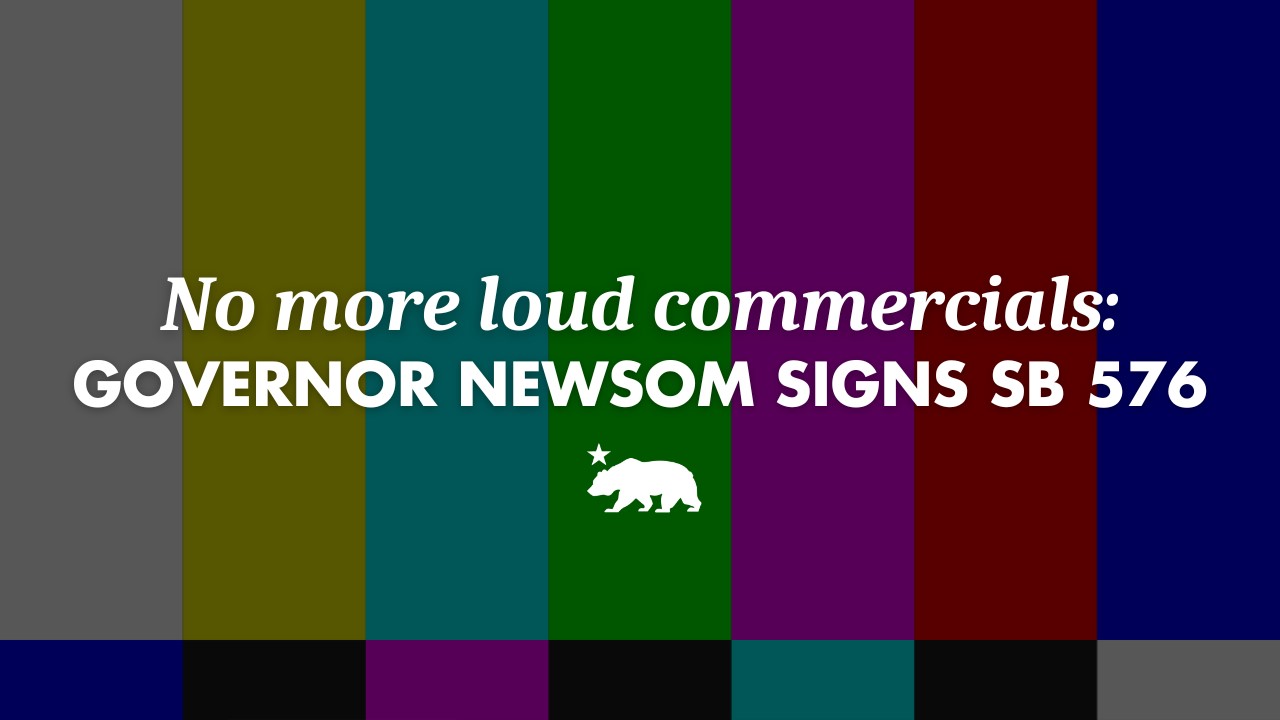

What SB 576 Requires: Starting July 1, 2026, streaming ad audio in video streaming services that serve, or are available to consumers in the State of California can’t be louder than the content they interrupt. It’s measured as average perceived loudness (LUFS), not peak levels. Even if you don’t insert the ads, you should ensure your content is at the correct loudness to match the inserted ads that will have been processed. If you are an advertising content provider, you should supply your advertising commercials at the correct loudness level. (Don’t rely on the content providers’ simple ‘brick wall or averaging’ approach to audio levelling!)
Why Simple Loudness Targets Don’t Work:
If you just measure an entire file and say “this averages -16 LUFS, we’re done,” you miss the reality. A file might have extra loud peaks or extra quiet moments scattered throughout. Those distort the average measurement. So technically you hit the target, but the listener hears jarring jumps when ads come on.
The Solution: A Two-Step Approach
For Live Streaming: Use Optimod with a hardware processor like the PCN1600. Optimod applies a continuously moving 10-second loudness adjustment window (5 seconds before + 5 seconds after) that slides forward through the entire stream in real-time. This smooths peaks and dips the way broadcast radio solved it decades ago.
For On-Demand Content: Add Audyllic’s in-house solution with Smart Watch Folder. Run your video file through it and you get back:
- A processed video file (MPEG-4 for YouTube submission)
- An optional processed audio file for your audio-only podcast version (Spotify, Apple Podcasts, etc.)
Both files locked to your exact loudness target: options include
- -16 LUFS (most common for audio podcasts)
- -14 LUFS (YouTube and Spotify)
- -19 LUFS (monophonic or dual mono audio*)
You can choose to have the MPEG4 video file set to -14LUF and the audio only file set a different loundess standard.
Works with a wide variety of audio formats—not just WAV. Processes 6 times faster than real time. A 1-hour podcast processes in 10 minutes.
Implementation Options:
- Audyllics’ ‘Smart Watch’ Folder works with either ‘On-premises’ or our cloud based Audyllic Optimod technology.
- API integration is available for programmatic workflows
Pick the approach that fits your infrastructure.
Why This Matters:
You’ve got pre-recorded masters at different standards, ads from multiple vendors, dynamic insertion happening after the fact. One workflow handles both your video and audio versions at scale. Without this, you’re manually processing two separate files slowly. With it, one input gives you compliant output for both platforms—fast.
The Timeline: Six months to implement. Most teams haven’t started.
Read more about SB 576 here